Quick answer: Most knee pain is first managed without surgery, through an accurate diagnosis, physiotherapy, weight and activity management, and medicines or injections where appropriate. Surgery is usually discussed only when pain continues despite these measures, daily activities such as walking, climbing stairs or sleeping are affected, and scans show structural damage that treatment without surgery is unlikely to correct. An orthopaedic examination is the only reliable way to know which stage your knee is at.
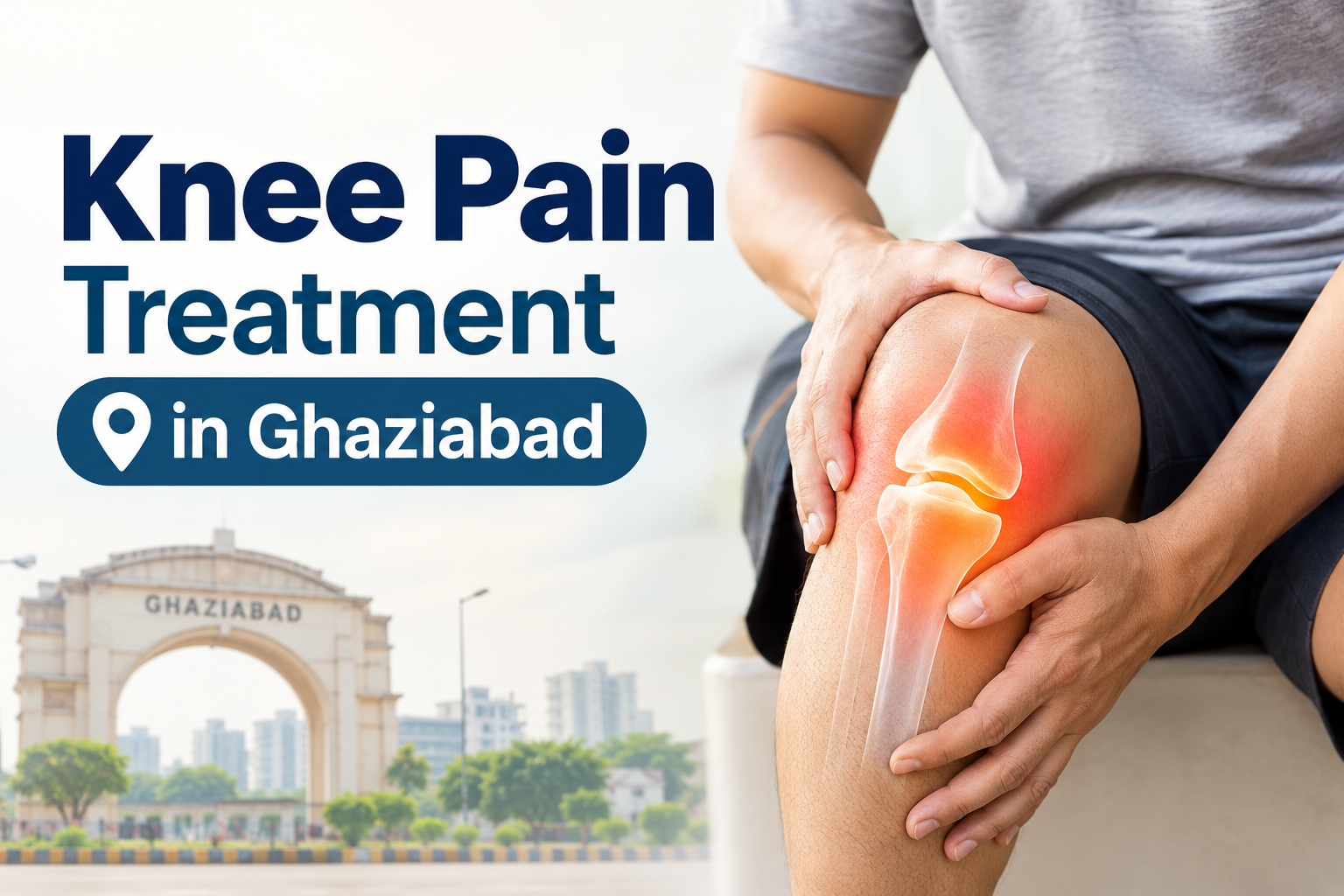
Knee pain is among the most common reasons people visit an orthopaedic doctor in Ghaziabad and across Delhi NCR. For some it begins after a fall or a sports injury. For many others it builds up slowly with age, body weight, or years of squatting, stairs and long hours on their feet. Painkillers or a few days of rest may help at first. But when the pain keeps returning, or each tablet seems to work for a shorter time, the knee needs to be examined, not just medicated.
This guide explains the common causes of knee pain, what knee pain treatment in Ghaziabad usually involves at each stage, how to recognise when medicines are no longer enough, and when your orthopaedic surgeon may start a conversation about surgery.
What causes knee pain?
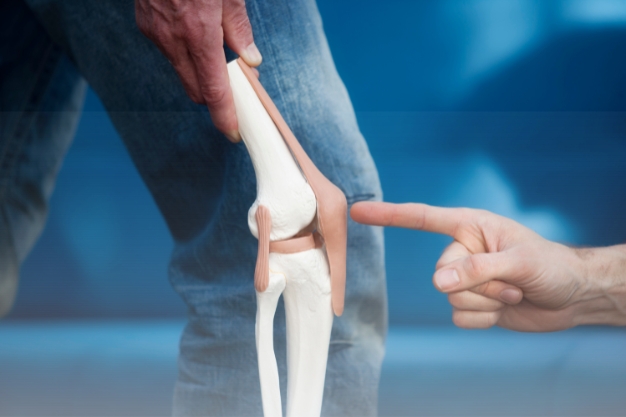
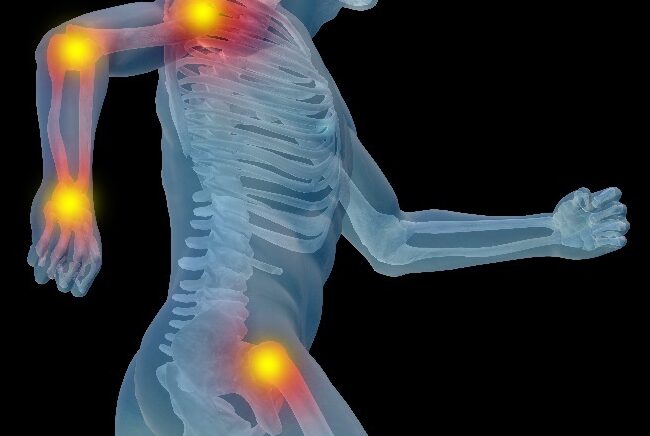
Knee pain is a symptom, not a diagnosis. The same complaint, such as pain when climbing stairs, can come from very different problems:
- Osteoarthritis: gradual wear of the joint cartilage, the most common cause of long-standing knee pain in middle-aged and older adults. It typically causes stiffness after rest, pain on stairs, squatting or sitting cross-legged, and swelling that comes and goes.
- Meniscus tear: damage to the cushioning cartilage inside the knee, often after a twisting injury. It may cause catching, locking, swelling or pain on the inner or outer side of the knee.
- Ligament injury (ACL, PCL, MCL): usually follows a sports injury or accident and can cause swelling and a feeling that the knee gives way.
- Patellofemoral pain: pain around or behind the kneecap, common in younger adults and runners, often worse on stairs or after prolonged sitting.
- Tendinitis and bursitis: irritation from overuse or repeated strain.
- Inflammatory arthritis and gout: conditions such as rheumatoid arthritis or gout can cause a warm, swollen, painful knee and need blood tests and sometimes a rheumatologist’s input.
- Fracture or infection: less common but urgent (see below).
Symptoms that should not wait
Get urgent medical care if you have:
- Inability to put weight on the leg after an injury, or a visibly deformed knee
- Sudden, significant swelling after a fall or twisting injury
- A red, hot, swollen knee with fever
- A knee that is locked and will not straighten
- Pain and swelling in the calf, especially after surgery, long travel or bed rest
Book an orthopaedic consultation soon if you have:
- Knee pain lasting more than one to two weeks despite rest and simple pain relief
- Pain that wakes you at night
- Repeated giving way or a feeling of instability
- Swelling that keeps coming back, or increasing stiffness
- Visible bowing of the legs or a change in the shape of the knee
- Shorter walking distance, or difficulty with stairs and getting up from a chair
How is knee pain diagnosed?
A proper diagnosis comes before any treatment decision. Your orthopaedic doctor will usually:
- Take a detailed history: when the pain started, what triggers it, any injury, night pain, locking, swelling, and what treatment you have already tried.
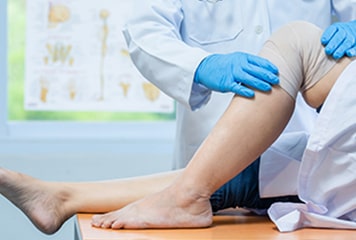
- Examine the knee: movement, swelling, tenderness, alignment, ligament stability and the way you walk.
- Order a weight-bearing X-ray: this shows joint space, bone changes and alignment.
- Advise an MRI when needed: useful for meniscus, ligament and cartilage problems that an X-ray cannot show.
- Suggest blood tests when needed: if an inflammatory condition or gout is suspected.
Scan findings and symptoms do not always match. Some people have changes on an X-ray but manage well, while others have significant pain with modest changes. Treatment is planned for the person, not only for the report.
Non-surgical knee pain treatment in Ghaziabad: what usually comes first
Knee pain treatment without surgery is the starting point for most patients with arthritis or overuse problems. The plan depends on the diagnosis, your age, activity level and other health conditions.
Activity modification and weight management
Extra body weight increases the load on the knee with every step. Even modest weight reduction can reduce strain. Your doctor may also suggest changing activities that aggravate the pain, such as repeated deep squatting, prolonged floor sitting or climbing many flights of stairs, and using a chair or raised seat where needed.
Physiotherapy and strengthening
Strong thigh, hip and core muscles share the load that would otherwise fall on the joint. A supervised programme of stretching and strengthening is a core part of knee arthritis treatment and recovery from many injuries. It works best when done regularly over weeks to months, not only for a few sessions.
Medicines
Pain relievers, anti-inflammatory tablets and topical gels can help control symptoms. They are meant for short, guided use. Anti-inflammatory tablets can affect the stomach, kidneys and blood pressure, particularly in older adults and in people with heart or kidney disease, so repeated self-medication is not advisable. Needing tablets on most days is itself a sign that you should have the knee reviewed.
Braces, supports and footwear
A knee support, a walking stick or well-cushioned footwear can reduce strain in selected patients. These are aids to comfort and function, and your doctor will advise whether they suit your condition.
Knee pain injections
Injections into the knee joint may be considered in selected patients, usually alongside exercises:
- Corticosteroid injections reduce inflammation and may give temporary relief. They are not used repeatedly without limit.
- Hyaluronic acid injections are intended to improve joint lubrication. Evidence is mixed, and some orthopaedic guidelines do not recommend routine use for knee osteoarthritis.
- Platelet-rich plasma (PRP) is an area where research is still evolving, and it is not suitable for every patient.
Injections help manage symptoms. They do not regrow cartilage or reverse advanced arthritis, and they cannot be relied on to prevent the need for surgery.
When medicines stop working: signs it is time to reassess
It may be time for a fresh orthopaedic review if:
- You need pain medicine on most days, and the relief is weaker or shorter than before
- Pain limits your walking distance, stairs, or getting up from a chair or toilet
- Night pain disturbs your sleep
- Regular physiotherapy and exercise for a few months have not improved your function
- Injections are giving shorter relief each time
- Stiffness is increasing or the knee is becoming visibly bowed or deformed
- Pain is stopping you from working, travelling, sitting on the floor or taking part in family life
These signs do not automatically mean surgery. They mean your current plan is no longer enough, and the diagnosis, scans and treatment options should be looked at again.
When is knee surgery discussed?
Surgery is considered when the knee has structural damage that is causing persistent pain or loss of function, and appropriate treatment without surgery has not provided enough benefit, or when an injury such as a complete ligament tear needs surgical correction. The options depend on the diagnosis:
| Procedure | Usually considered for | Points to know |
|---|---|---|
| Arthroscopy (keyhole) and meniscus repair | A torn meniscus causing locking or catching, loose fragments, and selected injuries | Repair is preferred when the tissue can heal. It is not a routine option for general arthritis pain. |
| ACL reconstruction | A torn ACL with instability, particularly in active people or those who play sports | Needs a structured rehabilitation programme afterwards |
| Osteotomy | Selected younger, active patients with early arthritis on one side of the knee and leg malalignment | Realigns the leg to shift load away from the damaged area |
| Partial knee replacement | Arthritis limited to one part of the knee with healthy ligaments | Suitable only for a small group of patients |
| Total knee replacement | Advanced arthritis with persistent pain, stiffness or deformity despite appropriate non-surgical treatment | Techniques such as robotic-assisted surgery may be discussed where available |
Your orthopaedic surgeon will weigh the severity of the damage on imaging, your age and activity level, any deformity, other health conditions such as diabetes, heart disease or high blood pressure, and your expectations and ability to follow rehabilitation. For more detail, see our pages on knee replacement surgery in Ghaziabad and meniscus repair.
All surgery carries risks, including infection, stiffness, blood clots, implant-related problems and anaesthesia risks, and recovery varies from person to person. Your surgeon should explain these clearly, along with the alternatives, so that the decision is yours.
Knee pain in elderly patients
Age alone is not a reason to avoid or to hurry treatment. In older adults, the plan also looks at heart and kidney health, diabetes, bone strength, fall risk and the medicines already being taken. Safe pain control, physiotherapy and mobility aids are usually the first steps. If surgery is considered, a pre-anaesthesia check-up helps assess whether it can be done safely.
Knee pain in younger adults and sports injuries
In younger people, knee pain more often follows a ligament, meniscus or kneecap problem. Swelling, giving way or locking after a twist or fall should be examined early, because continuing to play on an injured knee can cause further damage. Learn more about sports medicine care.
What to expect at your first orthopaedic consultation
Please bring:
- Previous X-rays, MRI films and reports
- A list of the medicines and injections you have taken, with approximate dates
- Records of any earlier knee treatment or surgery
- Recent blood test reports, if available
Wear comfortable clothing that allows the knee to be examined. Expect questions about how the pain began, what worsens it and how it affects your day. After the examination and any needed tests, the doctor will explain the diagnosis and the options, usually starting with treatment without surgery unless the injury needs urgent attention. You are free to ask questions and to take time, or a second opinion, before deciding on any major procedure.
Questions to ask your orthopaedic surgeon
- What is causing my knee pain, and how advanced is it?
- What are my options with and without surgery?
- What may happen if I wait?
- What are the risks and limits of each option?
- What will rehabilitation involve, and for how long?
- Do my other health conditions change the plan?
Simple habits that help protect your knees
- Maintain a healthy body weight
- Keep your thigh muscles strong with regular walking, cycling or swimming, guided by your doctor or physiotherapist
- Warm up before exercise and increase activity gradually
- Wear supportive footwear
- Avoid movements that sharply increase your knee pain
- Ask your doctor whether tests for vitamin D, calcium or blood sugar are appropriate for you
- Do not ignore swelling or instability after an injury
Frequently asked questions
Where can I get knee pain treatment in Ghaziabad?
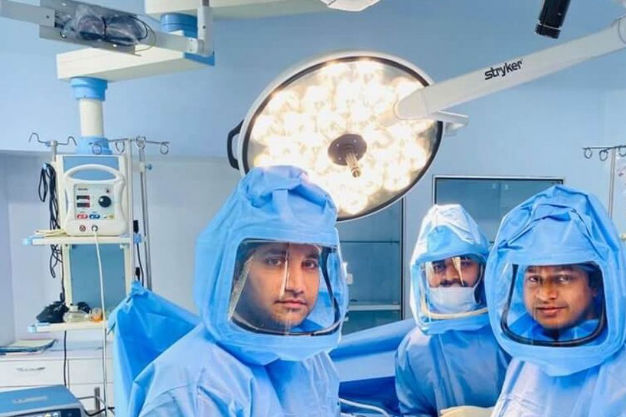
An orthopaedic doctor can examine the knee, order the right tests and plan treatment. Dr. Deepankar Verma consults at Varenya Healthcare Centre, Vasundhara, Ghaziabad, on weekday evenings. Full OPD details are given at the end of this article.
Which doctor should I see for knee pain, an orthopaedic doctor or a physiotherapist?
Start with an orthopaedic doctor for diagnosis. Physiotherapy is then used as part of the treatment plan. A rheumatologist may be involved if an inflammatory condition is suspected.
Can knee pain be treated without surgery?
In many patients, yes. Exercises, weight management, medicines, supports and sometimes injections can control symptoms, especially in the earlier stages of arthritis and in many overuse problems. The right approach depends on the cause.
When should I consider knee replacement?
Knee replacement is usually discussed when advanced arthritis causes persistent pain, stiffness or deformity that limits daily activities despite appropriate treatment without surgery. It is a shared decision after examination and scans.
Do knee injections cure knee pain?
No. Injections may reduce pain for a period of time, but they do not repair worn cartilage or reverse advanced arthritis.
Is knee pain normal after 40 or 50?
It is common, but persistent pain should not be accepted as an unavoidable part of ageing. It deserves evaluation, because early guidance often makes day-to-day management easier.
Is walking good for knee pain?
For many people with arthritis, regular walking at a comfortable pace helps keep the joint moving and the muscles strong. If walking sharply increases pain or causes swelling, stop and seek advice.
Do I need surgery at the first visit?
No. Unless there is an injury that needs urgent surgical care, treatment without surgery is generally the first step, and surgery is discussed only if it becomes appropriate.
Can I take a second opinion before knee surgery?
Yes. A second opinion is a reasonable step before any major surgery, and bringing your earlier reports makes it easier.
Consultation details
Dr. Deepankar Verma
MBBS, MS, FASM, FJR
Consultant Orthopaedic Surgeon, Fellowship in Joint Replacement and Sports Medicine
Medical Registration No.: DMC R. 52053
Phone: +91-7065807070
| Day | Varenya Healthcare Centre, Vasundhara, Ghaziabad | Sant Parmanand Hospital, Kashmere Gate, Delhi | Kailash Hospital and Neuro Institute, Sector 71, Noida |
|---|---|---|---|
| Monday | 6:30 PM to 9:00 PM | 11:00 AM to 1:00 PM | – |
| Tuesday | 6:30 PM to 9:00 PM | 12:00 PM to 2:00 PM | – |
| Wednesday | 6:30 PM to 9:00 PM | – | 9:00 AM to 11:00 AM |
| Thursday | 6:30 PM to 9:00 PM | 12:00 PM to 2:00 PM | – |
| Friday | 6:30 PM to 9:00 PM | 11:00 AM to 1:00 PM | – |
| Saturday | 6:30 PM to 9:00 PM | – | 9:00 AM to 11:00 AM |
Clinic address: Varenya Healthcare Centre, 1139/1, MIG Houses, Sector 3, Vasundhara, Ghaziabad, Uttar Pradesh 201012
OPD timings can change, so please confirm by phone before visiting.
Disclaimer: This article is for general patient education and does not replace an in-person consultation, diagnosis or treatment. Treatment decisions depend on individual examination and investigations. Outcomes and recovery vary between patients.