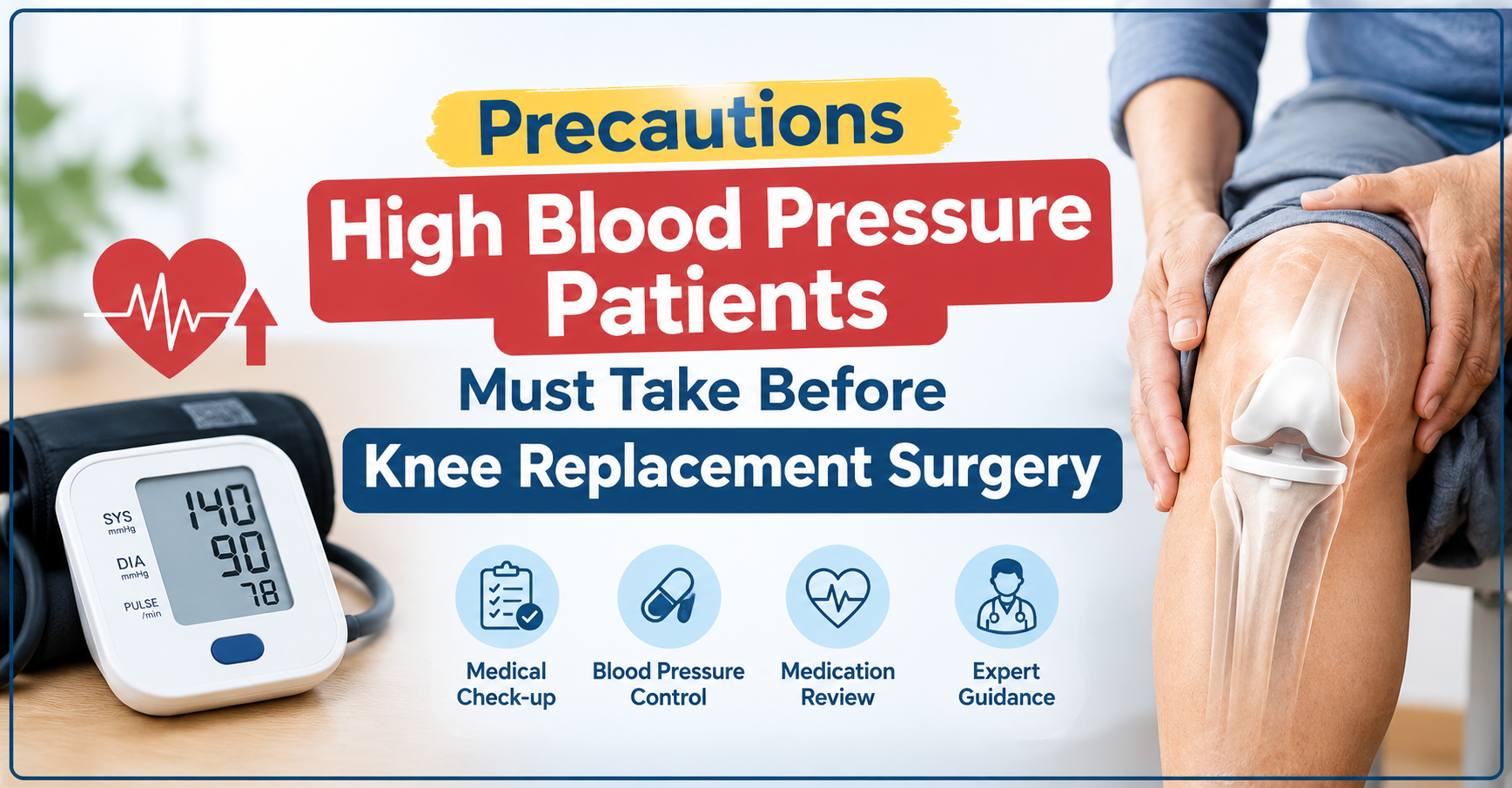
High blood pressure (hypertension) is very common in people who need a knee replacement, especially in India. If it is not well controlled, it can complicate surgery and slow recovery. The good news is that with the right precautions, most patients with high blood pressure can safely undergo knee replacement and recover well. This guide explains why blood pressure matters, how to prepare, and what to do before, on the day of, and after surgery.
Can You Have Knee Replacement with High Blood Pressure?
Yes, in most cases. Stage 1 or stage 2 hypertension, meaning readings below 180/110 mmHg, is not by itself a major risk factor for complications around surgery. At or above 180/110 mmHg, your orthopaedic surgeon, anaesthetist and physician weigh the benefit of delaying surgery against the risk of waiting. Keep taking your blood pressure medicines unless your team tells you otherwise.
BP high hai to kya knee replacement ho sakta hai? Zyadatar mareezon mein haan, agar BP control mein ho aur aap doctor ki salah se apni dawai lete rahein.
Why Blood Pressure Matters in Knee Surgery
Uncontrolled hypertension can lead to unstable blood pressure and heart rate during anaesthesia, more bleeding, slower wound healing and a higher chance of heart or kidney strain after surgery. That is why your anaesthetist looks closely at your BP records before an operation. Good control makes anaesthesia safer and gives the knee a smoother start to recovery.
Pre-Operative Medical Evaluation
Before a planned knee replacement, patients with high blood pressure usually need a thorough check-up. This typically includes:
- Home blood pressure log: Record readings for 1–2 weeks before your visit and bring it along.
- ECG: To check heart rhythm and look for signs of reduced blood supply to the heart.
- Echocardiogram (heart ultrasound): Advised if you have chest pain, breathlessness, swelling in the legs or a heart murmur.
- Blood tests: Complete blood count, blood sugar (HbA1c or fasting glucose), kidney function (creatinine, electrolytes) and a clotting profile, as advised.
- Physician or cardiologist opinion: Needed if BP is very high, if you have heart disease or stents, or if you take blood thinners.
- Pre-anaesthesia check-up: The anaesthetist reviews your tests and medicines and plans the safest anaesthesia for you.
Target Blood Pressure Levels
There is no single “safe” number for everyone, and your doctor will set a target based on your overall health. As a general guide:
- In the weeks before surgery: Teams generally prefer BP to be consistently controlled, ideally below about 160/100 mmHg, which helps avoid last-minute postponements.
- On the day of surgery: Surgery can usually go ahead if BP is below 180/110 mmHg. Above this, the anaesthetist and surgeon may treat the reading and, if needed, delay the operation.
Even a modest improvement, for example from 180/100 to 150/90 mmHg, can make surgery noticeably safer.
Medication Management
Handling your BP medicines correctly is one of the most important precautions.
- Continue most BP medicines. Beta-blockers, calcium channel blockers and diuretics are usually continued up to the morning of surgery. Stopping suddenly can spike your BP.
- ACE inhibitors and ARBs: Some anaesthetists advise skipping the morning dose to avoid a sharp drop in BP under anaesthesia. Practice varies, so ask your doctor.
- Blood thinners, aspirin and stent medicines: Never stop these on your own. Your surgeon and cardiologist will decide together if and when to pause them.
- Painkillers: Regular anti-inflammatory pain tablets (NSAIDs) taken for knee pain can raise blood pressure and strain the kidneys. Tell your doctor which painkillers you take.
- Diabetes medicines: If you also have diabetes, insulin or tablet doses are often adjusted around surgery.
Bring a list of all your medicines, with doses, to every pre-operative visit.
How to Lower Blood Pressure Before Knee Surgery
Take your BP medicines exactly as prescribed, cut down on salt, reach a healthy weight if your doctor advises it, stay active, stop smoking, limit alcohol and keep a home BP log. Do not change any dose on your own. Start working on these 6–12 weeks before surgery:
- Eat less salt: Reduce pickles, papad, namkeen, packaged snacks and extra salt at the table. Include fruits, vegetables, dals, whole grains and curd.
- Manage weight: Even a 5–10% weight loss, if your doctor approves, lowers BP and reduces the load on your knee.
- Stay gently active: Walking, stationary cycling and swimming help the heart and the knee. A physiotherapist can guide pre-surgery strengthening.
- Quit smoking and limit alcohol: Smoking raises BP and slows wound healing.
- Sleep and stress: Poor sleep and stress push BP up. Try deep breathing or meditation, and tell your doctor if you snore heavily or feel very tired in the day.
How to check BP at home: Sit quietly for 5 minutes with your back supported and your arm at heart level. Take two readings, one minute apart, in the morning and evening, and note them down.
Day-of-Surgery Checklist
- Bring your BP log and medicine list. The team will check your BP again on admission.
- Fast exactly as instructed by the anaesthetist.
- Take only the medicines you were told to take, with a small sip of water.
- Wear loose, comfortable clothing and avoid smoking or caffeine before surgery.
- Ask questions and make sure you understand the anaesthesia plan.
Your BP is monitored continuously during the operation, and your anaesthetist has medicines ready to treat any rise or fall quickly.
Recovery and Post-Operative Monitoring
After surgery your BP, pain and heart rate are watched closely. Walking with support from the first or second day, as advised by your team, helps circulation, knee movement and BP control. Follow your physiotherapy plan, see 6 physical therapy exercises after knee replacement and tips for fast recovery after knee replacement surgery.
Get urgent medical help if you develop chest pain, breathlessness, a severe headache, or pain and swelling in one calf.
High Blood Pressure After Knee Replacement Surgery
Blood pressure can rise after knee replacement, and uncontrolled pain is a common reason because pain increases stress hormones. Your team monitors your BP, treats your pain and restarts your usual BP medicines once you can take them by mouth. There is no fixed number of days for how long these lasts, as it depends on pain control, your regular medicines and your general health. Keep checking your BP at home after discharge and tell your doctor if readings stay high.
Frequently Asked Questions
Can knee replacement be done if I have high blood pressure?
Yes, in most cases. Readings below 180/110 mmHg are generally acceptable for surgery. Above that, your team decides with you whether to delay until BP is controlled.
Will surgery be done if my BP is high on the day?
It depends on how high it is and why. Slightly raised readings are usually managed and surgery goes ahead. Very high readings, such as above 180/110 mmHg, may lead to a delay.
Can I skip my BP tablets on the day of surgery?
Do not skip them unless told to. Most are continued with a sip of water. Your surgeon or anaesthetist will say if any, such as an ACE inhibitor or ARB, should be held.
How can I lower my blood pressure before knee surgery?
Take medicines as prescribed, eat less salt, stay active, quit smoking, limit alcohol and keep a home BP log. Never change a dose on your own.
Is high blood pressure after knee replacement normal?
BP can rise after surgery, often because of pain. Your team monitors it and treats the cause. Report severe headache, chest pain or leg swelling at once.
How long does high BP last after knee surgery?
There is no fixed duration. It depends on pain control, your usual medicines and overall health. Continue home checks and follow up with your doctor.
Should I get a second opinion?
If you are unsure about the need for surgery or its timing, a second opinion from another orthopaedic surgeon can help you decide. Read when a second opinion before knee or hip replacement makes sense.
Related Reading
Book a Consultation
If you have high blood pressure and have been advised knee replacement, an orthopaedic consultation can help plan your surgery safely. Call +91-7065807070 or book an appointment.
Varenya Healthcare Centre: 1139/1, MIG Houses, Sector 3, Vasundhara, Ghaziabad, Uttar Pradesh 201012 (Mon–Sat, 6:30 PM–9:00 PM)
Last reviewed: 10 November 2026. This article is for general information and does not replace a medical consultation. Blood pressure targets and medicine decisions are set by your own doctor, and results vary from patient to patient.